
Selected case studies
Light, in context.
Three projects. Three architectural scales. Follow the curve, look into the detail and trace a path through the landscape.
Design considerations below support early project planning. Confirm technical selections against the chosen model and configuration.
Selected project / 01
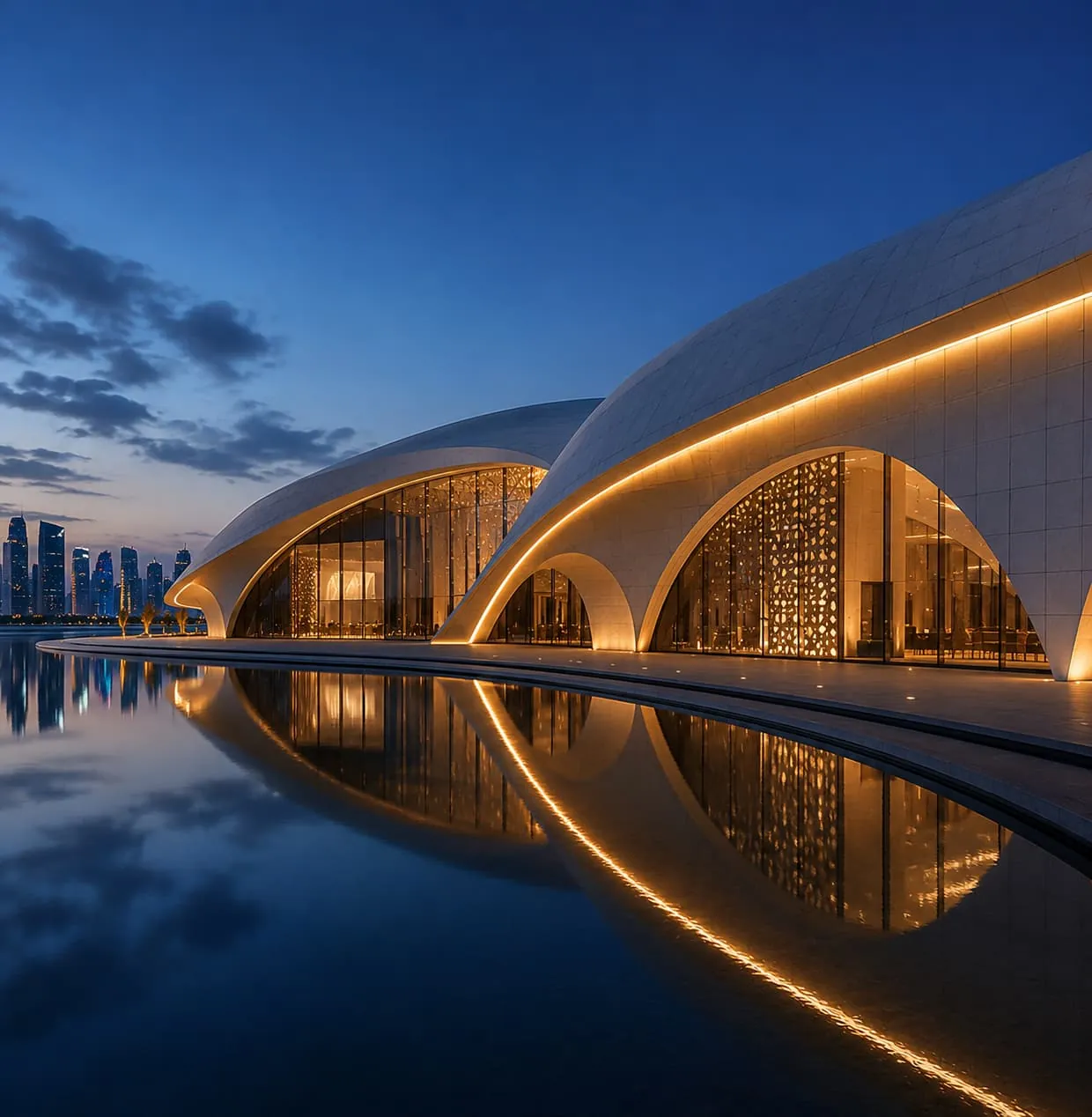
Following the Curve.
Project at a glance
Doha, Qatar · 2025. Facade Lighting · 12,000 m of Linear Lighting.
Design lens
A facade is read at a distance and in motion. As a design lens, following the curve means looking for the building’s main gesture and deciding how a light line can reinforce it without competing with every surrounding edge.
Design intention
Trace the primary curve and the viewpoints from which it will be seen. Preserve the hierarchy between the overall silhouette and smaller details.
Detail to resolve
Resolve bend direction, radius, supports and transitions in the section. Check the selected product against the geometry rather than forcing the geometry to fit an image.
Review in context
Review brightness, aiming and operating hours in context. Consider nearby windows and the night-time setting before settling on the final scene.
Selected project / 02
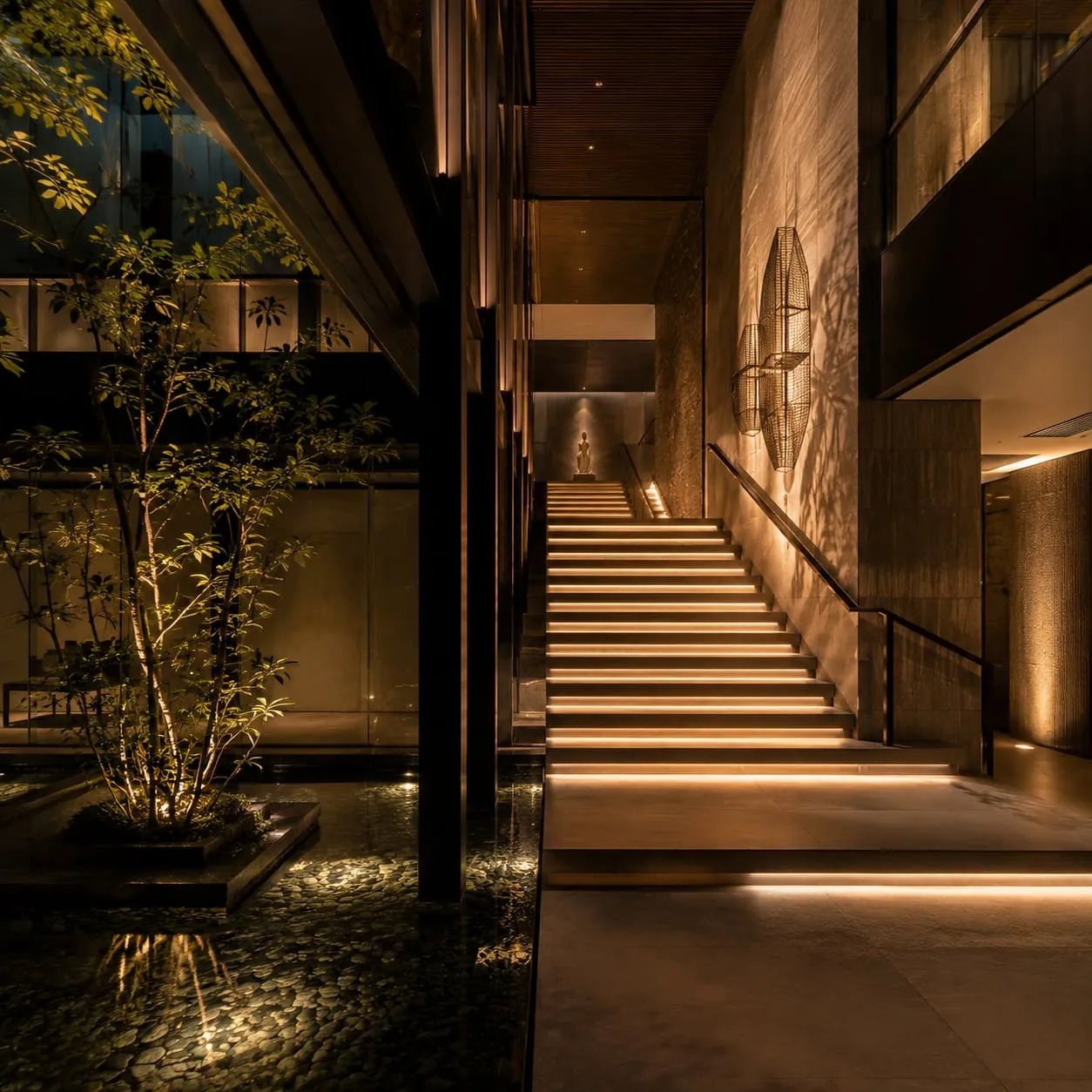
Lighting the Detail.
Project at a glance
Singapore · 2024. Interior Architecture · 8,500 m of Linear Lighting.
Design lens
In an interior, the small junction often carries the whole idea. A line may be visible as a precise surface, or concealed so that light reveals the surrounding material. Deciding which of these experiences matters helps focus the detail.
Design intention
Identify what the eye should notice first: the luminous line, the illuminated surface or the depth of a recess.
Detail to resolve
Study the relationship between profile, diffuser, finish and viewing angle. Consider access for installation and future maintenance at the same time.
Review in context
Assess a sample with the proposed materials. Check reflections and visible brightness from seated, standing and approaching viewpoints.
Selected project / 03
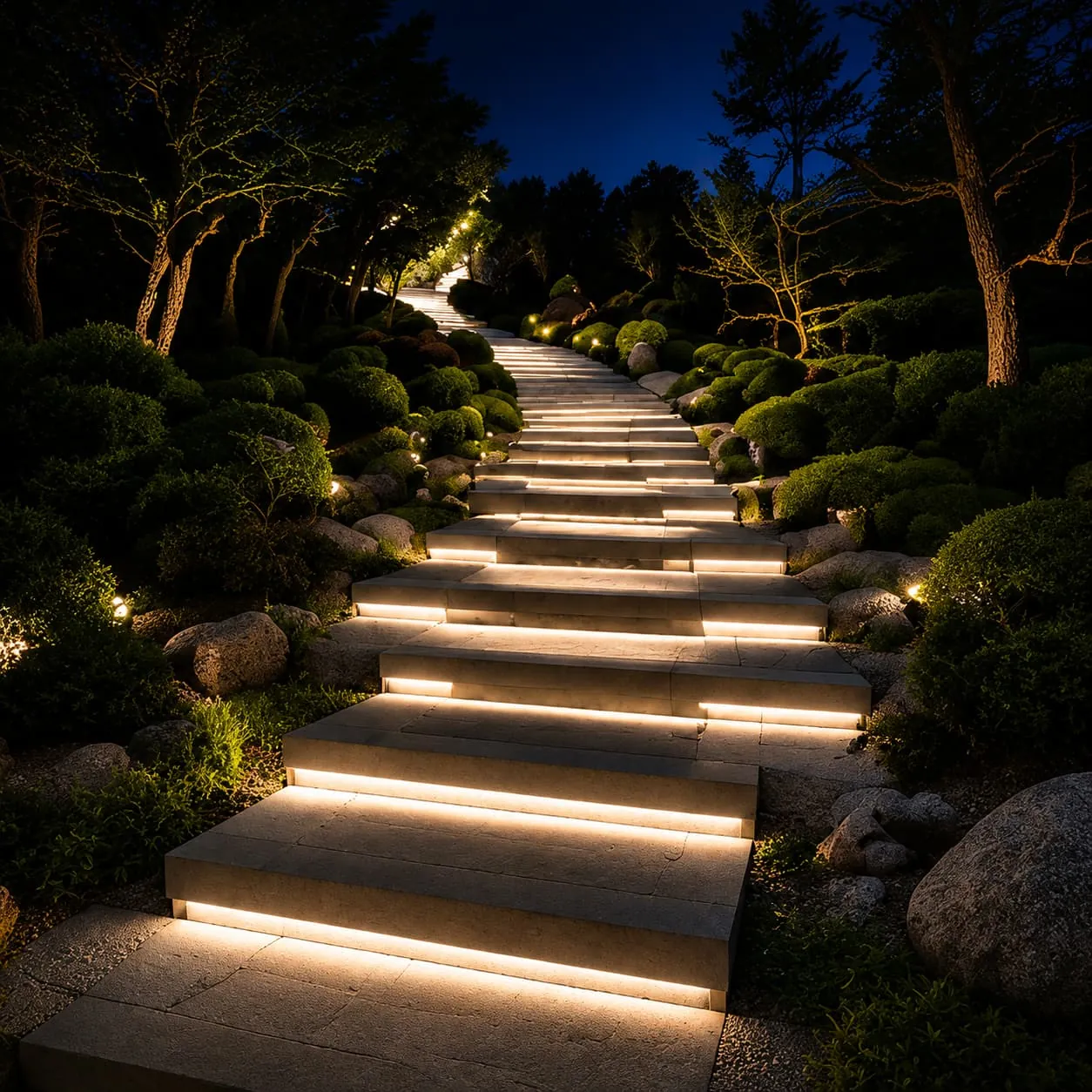
Path of Light.
Project at a glance
Zurich, Switzerland · 2024. Landscape Lighting · 5,600 m Linear Lighting.
Design lens
A landscape route unfolds rather than appearing all at once. Use its changes in direction, edges and places to pause as a design lens. Light can clarify that sequence while preserving a quieter background.
Design intention
Map the route and the transitions that need to be legible. Avoid illuminating an entire landscape when a few carefully chosen elements can explain the journey.
Detail to resolve
Coordinate the mounting and finished connections with the actual exposure, drainage and access conditions. Confirm suitability for the complete selected assembly.
Review in context
Direct light toward the intended surfaces and use only the level and hours needed. Review spill beyond the route and consider warmer light where appropriate.
From architectural intent to experience.
Begin with Architectural Intent: understand the vision, the space and the atmosphere. Lighting Design then gives that intent a visual language and a clear relationship to movement, material and form.
Custom Development brings engineering and prototyping into the conversation. Resolve the details that make the design specific to its setting, from geometry and mounting to the connections between components.
The Final Experience is where those decisions are read together. For your own project, keep the visual intention, drawing revisions, sample decisions and selected configuration connected as the work develops.